What does the latest AI news mean for how you use Grok Bot, ChatGPT and Claude?
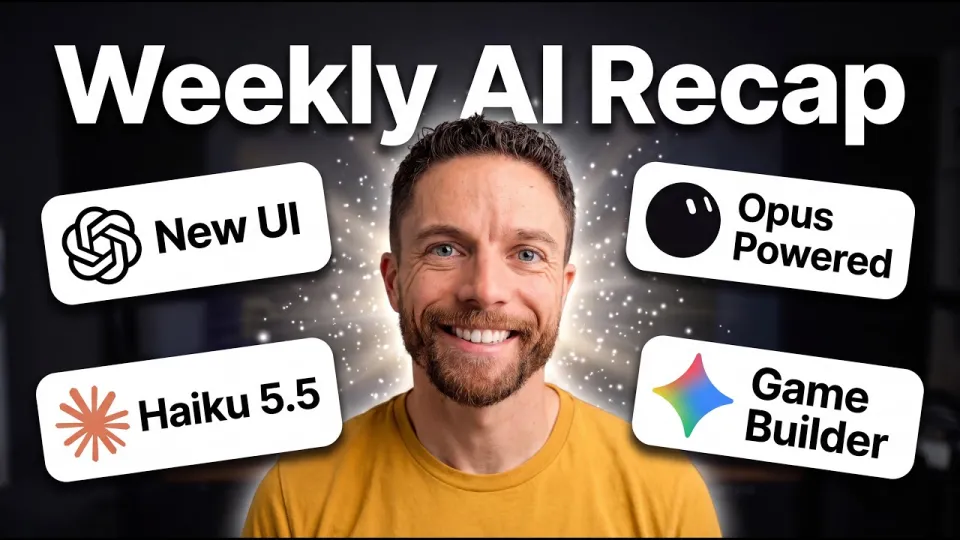
Video: Weekly AI Recap: GrokBot Just Did the Unthinkable, ChatGPT Looks Completely Different & More!
You can order the same kind of articles for your own video to boost it on YouTube and Google. Just message the Telegram bot @sat_sit_bot. Articles with your video embedded are written and posted by the bot itself — on popular topical sites (no ads). Try it free: 50 articles on us.
· based on the channel Paul J Lipsky
Key takeaways
- Grok Bot is positioned as an orchestrator that can call on Claude, Midjourney and Suno instead of relying on a single model.
- ChatGPT gets an Intelligent UI that changes how the assistant presents and routes its responses.
- Claude Cowork moves to the cloud, shifting collaborative agent work off the local machine.
- Google adjusts Gemini plans and ships Nano Banana 2.1 for image generation.
- Paul J Lipsky's weekly recap separates real product changes from hype, with hands-on testing of Google Playground.
The latest AI news is less about one model getting smarter and more about tools learning to work together: Grok Bot is being pitched as an orchestrator that can pull in Claude, Midjourney and Suno, ChatGPT is getting a redesigned Intelligent UI, and Claude Cowork is moving to the cloud. Paul J Lipsky walks through all of it in his weekly recap, and the pattern is consistent — the assistants are becoming routers, and the value is shifting to what they can coordinate. If you want to try the agent-style workflow discussed in the video, you can sign up for Okou and claim a launch offer with the promo code shown in the episode.
What Grok Bot actually changes by calling other AI models
Grok Bot's headline move is orchestration: instead of answering only with its own model, it can route tasks to Claude for reasoning-heavy work, Midjourney for images and Suno for audio. That matters because most real projects are not single-model jobs — a social video needs a script, a voice track, visuals and a caption, and each step has a different best tool. An orchestrator that holds the plan and hands off sub-tasks removes the copy-paste loop between tabs.
The practical test in the recap is a business video workflow: a folder of raw clips goes in, and what comes back is a script, a recorded voiceover fed back in, and a finished cut. That is a meaningful jump from "chat with a bot" to "delegate a deliverable." The caveat is control — when one agent calls three services, you need to know which tool produced which asset, what it cost, and where the files live.
ChatGPT's Intelligent UI and what a redesign signals
ChatGPT's new Intelligent UI is the most visible change of the week because it alters the surface, not just the model. A redesigned interface usually means the assistant is deciding what kind of answer to render — a table, a chart, a step list, a document — rather than returning uniform text. For daily users, the effect is fewer follow-up prompts to reformat output and a shorter path from question to usable artifact.
Redesigns also reset habits. Prompts tuned to an older layout may need rewording, and shared team workflows built around specific output shapes should be re-checked after any UI change. The useful question is not whether it looks different, but whether the assistant now picks the right format on the first try.
Claude Cowork in the cloud and the shift to shared agents
Claude Cowork moving to the cloud changes who can use agent-style work and where it happens. Running collaborative agent sessions locally ties them to one machine, one battery and one person; a cloud version makes the same workspace reachable from other devices and easier to hand to a teammate. For teams, that is the difference between a demo and a process.
The trade-off is data handling: cloud sessions mean files and context leave the local environment, so retention rules and access permissions become part of the workflow design. The other Anthropic thread in the recap — the Claude Haiku 5.5 line — points in the same direction, pushing cheaper, faster models into the routine steps so the expensive reasoning is spent only where it pays off.
Gemini plan changes and Nano Banana 2.1 for images
Google's week mixes packaging and product. Gemini plan changes affect which model tier and storage you get for the money, and the detail worth checking is what a given subscription actually unlocks rather than the headline price. On the product side, Nano Banana 2.1 continues the rapid iteration of Google's image generation, where small version bumps tend to mean better prompt adherence and cleaner edits.
The recap also includes hands-on time with Google Playground, which is the right way to judge these releases: a model that demos well in a launch clip can still be slow or awkward in a real session. Treat plan changes as a budgeting question and model updates as a testing question.
Common questions from people following this AI news
The most common confusion is about the "primary" bot that appears in an account without warning. Users who deleted it assuming something had gone wrong later found they could not restore it, so the safe rule is to inspect an unfamiliar agent before removing it. A second recurring question is whether these tools replace hired help: the realistic answer is that they compress production time, while judgment, taste and client context still sit with a person.
A third theme is access — people want to know which subscription tier includes which model, and plan pages are the only reliable source because bundles change quietly. Finally, non-technical users keep asking for a plain-language entry point into coding agents; the demand is real, and the honest advice is to start with a small, reversible task rather than a full project.
How to test this week's AI releases without wasting time
- Pick one real deliverable you already produce, such as a short video or a client brief.
- Run it once through the orchestrator (Grok Bot calling other tools) and once through your current manual process.
- Record time, cost and the number of manual fixes for each.
- Check where the files end up and who can access them before you adopt the cloud version.
- Re-test after any UI change, because a redesign can silently alter output formats.
What the weekly recap format is good for
A week of AI news is hard to hold in your head because the announcements come from competing companies at different levels of maturity. A structured rundown by company — Grok Bot, OpenAI, Anthropic, Google — keeps the comparisons honest and makes it obvious which changes affect your workflow today and which are positioning for later. The channel's habit of testing tools rather than repeating launch copy is what makes the summary usable.
Bottom line
The through-line in this AI news is consolidation of control: Grok Bot routing work to Claude, Midjourney and Suno, ChatGPT deciding how to present answers, Claude Cowork moving sessions into the cloud, and Google reshuffling Gemini plans around a faster image model. None of these is a single dramatic leap, but together they move assistants from answering questions to running small production pipelines. Paul J Lipsky's weekly recap is a good place to see that shift laid out company by company. If you want to test the agent workflow yourself, register on Okou with the promo code from the episode and run one real task through it before committing.
Questions & answers
What is Grok Bot and why is it described as doing something unthinkable?
Grok Bot is presented as an orchestrator that can hand tasks to other services, including Claude, Midjourney and Suno, instead of answering with a single model. The surprise is the cross-vendor routing: a bot from one company coordinating competitors' tools. In practice it means one agent can hold a plan and produce a script, images and audio in sequence.
Does ChatGPT's Intelligent UI change how prompts work?
The redesign changes how answers are presented and routed, so output formats may differ from what you are used to. Prompts built around a specific layout can need small rewording, and team workflows should be re-checked after the update. The benefit is fewer follow-up requests to reformat a response.
What does Claude Cowork moving to the cloud mean for teams?
Cloud sessions make collaborative agent work reachable from more than one machine and easier to share with colleagues. The trade-off is data handling, since files and context leave the local environment. Teams should decide on retention and access rules before moving real work into it.
Is a higher Gemini plan worth it for image work?
Plan changes affect model access and storage, so compare what each tier actually unlocks rather than the headline price. Image quality also depends on the model version, and Nano Banana 2.1 is an incremental update rather than a new category. Test the specific tasks you run before upgrading.
Source: Weekly AI Recap: GrokBot Just Did the Unthinkable, ChatGPT Looks Completely Different & More! · Markdown version